


September 24, 2025 | Bull X Bear
OpenAI was founded in 2015 by Sam Altman, Elon Musk, and four other co-founders with the mission of building Artificial General Intelligence (AGI) that benefits humanity. The company has always kept its teams lean but highly impactful — just 20–25 people in 2016, and around 300 by the time ChatGPT launched in 2022. ChatGPT became a cultural phenomenon, reaching one million users in only five days, the fastest adoption curve in consumer tech history. By 2025, OpenAI has grown to more than 700 million weekly active users.
The relationship between OpenAI and Nvidia runs deep. In 2016, Nvidia CEO Jensen Huang personally delivered one of the first DGX supercomputers to OpenAI, helping accelerate its research. At that time, Nvidia declined an opportunity to take an equity position in OpenAI — according to Huang, the company didn’t have the financial flexibility.
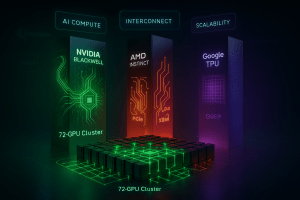
Still, the partnership shaped Nvidia’s trajectory. Collaborations with OpenAI gave Nvidia insight into the compute demands of frontier AI, reinforcing its decision to double down on datacenter hardware. That confidence led to transformative moves like the $7 billion acquisition of Mellanox, which cemented Nvidia’s dominance in GPU interconnects. Today, Nvidia’s valuation has soared past $4.5 trillion, with a moat in AI infrastructure that looks nearly untouchable.
On paper, investing early in OpenAI looks like an obvious win. But the timing made it tricky:
In hindsight, avoiding an equity stake in OpenAI allowed Nvidia to scale its platform without being seen as favoring a single player.
Several dynamics have changed:
Some critics dismiss the $100 billion outlay as financial engineering to pad Nvidia’s revenue. But the reality is far more strategic. This move isn’t about chasing short-term numbers — it’s about anchoring Nvidia’s role at the very center of the AI economy, ensuring that as OpenAI grows into one of the most valuable companies on earth, it will do so on Nvidia’s hardware.
Nvidia’s bet on OpenAI is less about speculative returns and more about securing the future of its ecosystem. It’s not a gamble — it’s a power play to stay indispensable in the age of AGI.


No posts found in Apple
No posts found in NVIDIA





Thank you!
Your comment has been submitted.